 Speech models
 Voice agents
 Logistics systems
 Sensors
 Security and compliance
 Medical transportation
 Public transit
 Freight
 About
 Open roles
 Contact
 Support
 Articles
Sensors
Every vehicle on the map.
A Wren sensor plugs into each van's diagnostic port and tells Wren where the van is, whether it is running and how far it has gone. Sensors come with Wren; they are not sold separately.
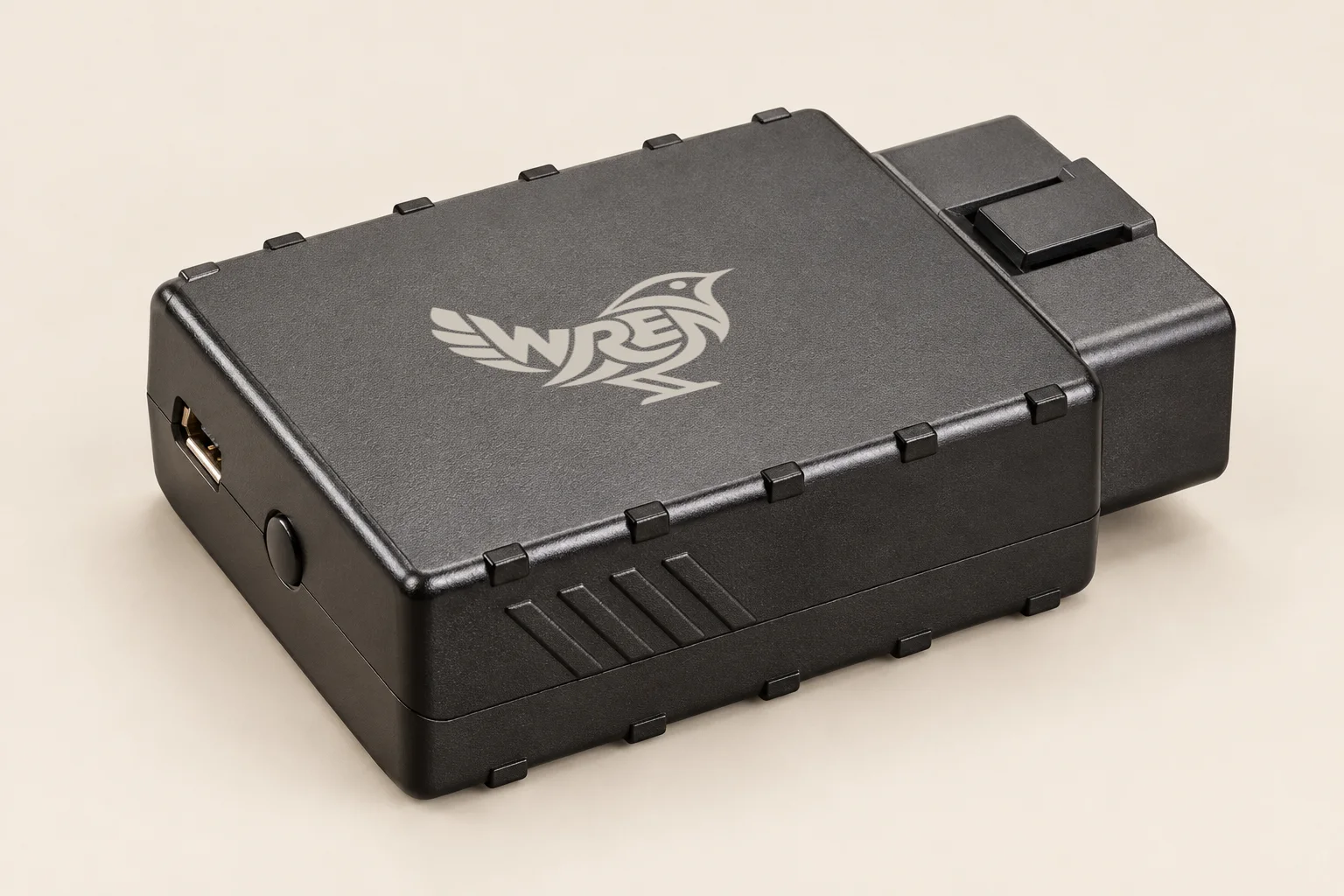
Everything the vehicle can tell.
Six parts in a 63-gram case, sending to Wren every 30 seconds while the vehicle moves.
Where the van is
Satellite receiver
- Position, speed, heading and altitude
- Satellites in view, and how precise the fix is
- Miles driven, by satellite or from the van
- Arriving at and leaving up to 50 places, such as a rider's door or a clinic
- Speeding, and a satellite signal being jammed
How it moves
Motion sensor
- Moving or parked
- Harsh acceleration, braking and cornering, and an eco score for each trip
- A crash, with a trace of the seconds around it
- Being towed with the ignition off
- Idling too long, and being unplugged
What the engine reports
Diagnostic plug
- Up to 40 standard values: engine speed and load, coolant temperature, fuel level and rate, throttle and more
- Fault codes, and the miles driven with the check-engine light on
- The van's own odometer, fuel level and miles to its next service, where its maker exposes them
- The vehicle identification number, which ties the sensor to its van
What the cabin feels
Bluetooth
- Temperature and humidity, from a Bluetooth sensor in the cabin
- A door opening and closing, from a door sensor
- The driver's tag, when the driver carries one
How it reports
Cellular radio
- Signal, network and band
- Readings waiting to send, kept on the sensor where there is no signal
How it stays powered
Backup battery
- Ignition, and the van's battery voltage
- Its own backup battery
A dispatcher that can see the road.
The sensor is how the rest of Wren knows where the vans are. The logistics systems plan around it and the voice agents speak from it.
- Stamps arrival, pickup and drop-off with the time and the place, from the van rather than a tap on a phone
- Starts the no-show wait at the minute the van arrives
- Texts the rider when the van is close, from where the van actually is
- Sends a rider's return pickup to the nearest van that can take it
- Bills loaded miles from the van itself, with the route, the times and the van's identification number kept on each trip
- Sends fault codes to maintenance and harsh driving to the driver's record
Small enough to forget.
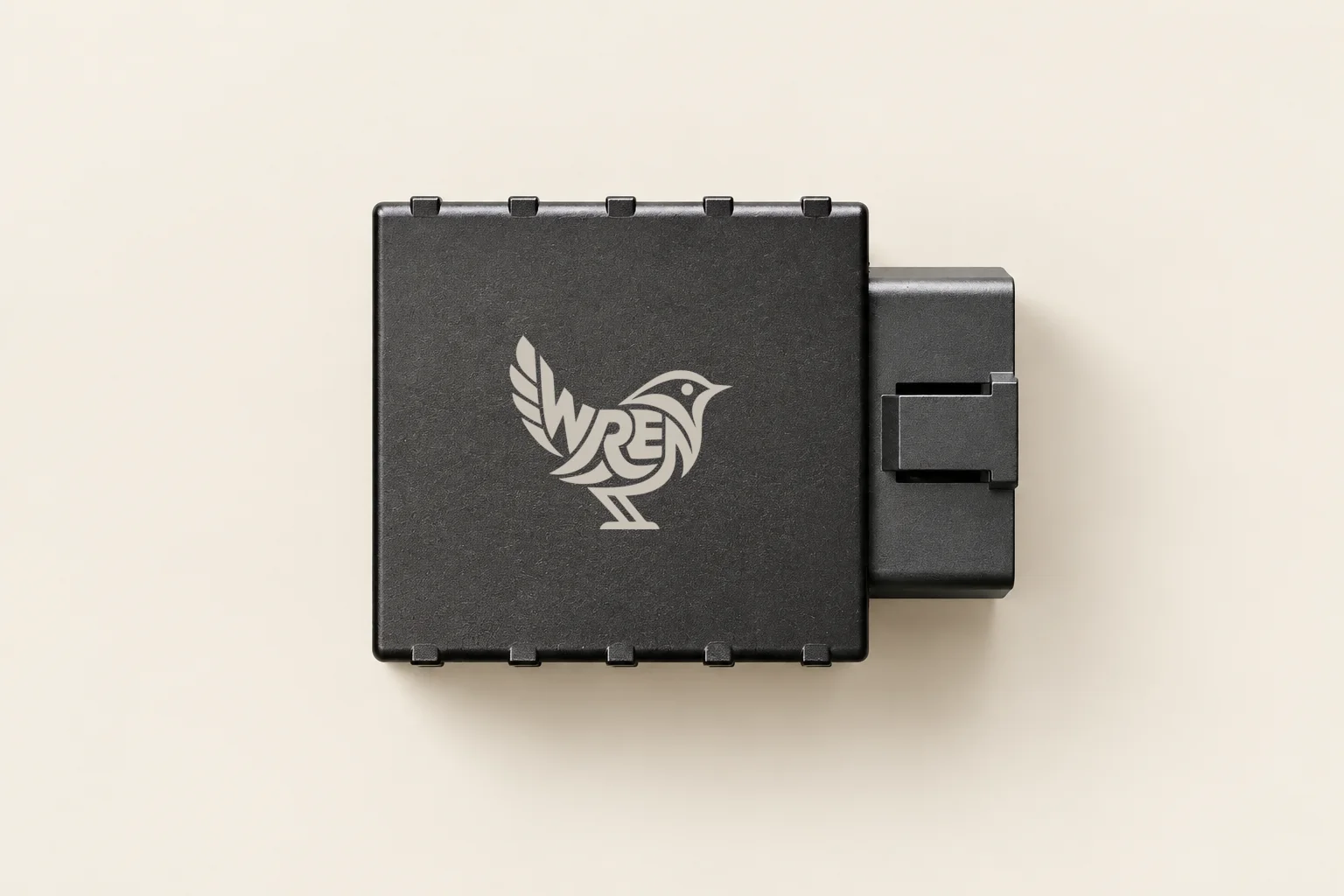
- Positioning
- GPS, GLONASS, Galileo, BeiDou and QZSS; within 3 m
- Connectivity
- LTE Cat M1
- Bluetooth
- 4.0 and Low Energy, for cabin sensors and tags
- Vehicle data
- OBD-II over CAN and K-Line; values vary by vehicle
- Motion
- Accelerometer
- Memory
- 128 MB, for readings held where there is no signal
- Backup battery
- 115 mAh Li-ion
- Power
- 10 to 30 V from the OBD-II port
- Size and weight
- 67 × 50 × 25 mm, 63 g
- Operating temperature
- −40 to 85 °C, without battery
- Protection
- IP41
- Indicators
- Two status lights; micro-USB for service
Plugged in once.
Wren sets up the sensors with your account, and each one stays in its vehicle.
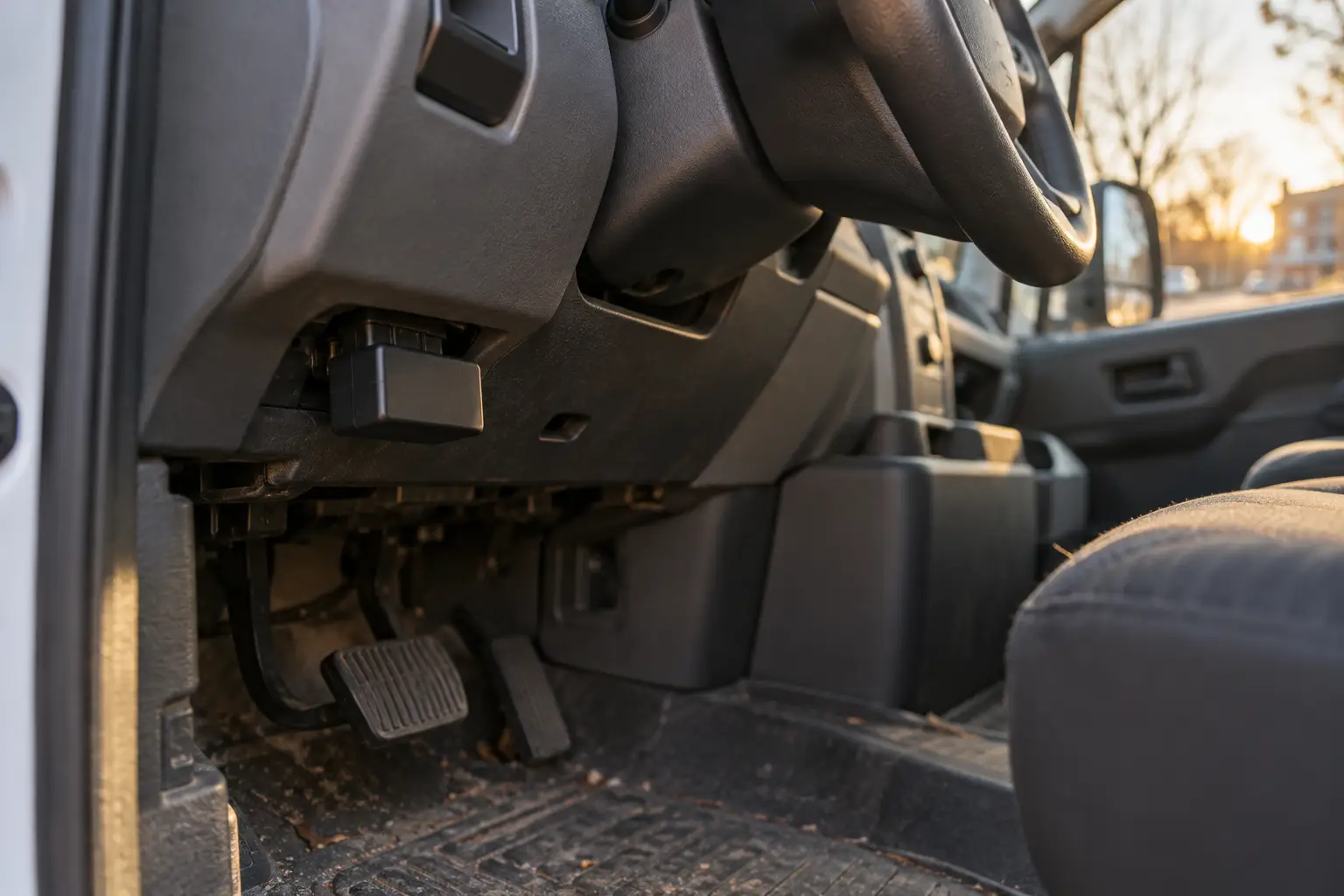
- Plugs into the diagnostic port under the dashboard, on the driver's side, with no tools and no wiring
- Powers up from the port, finds its position and connects on its own
- Puts the van on Wren's map, with its trips and miles from then on
Sensors are one part of Wren.
They feed the board's map and the texts the voice agents send.
Voice agents
Answer every call in your company's name, book and change rides on the call, and make the confirmation calls your team makes today.
Learn moreLogistics systems
Plan tomorrow in one step, run today on one board, and keep every trip on the record from the first call to the drop-off.
Learn moreSensors
This pageA sensor in every vehicle reports where it is, whether it is running and how far it has gone, so every trip has proof.
Learn more